Virus Diversity and Bioinformatics Lab
Blending Field Research, Lab Experimentation, and Bioinformatics for Scientific Discovery, Conservation, and Community.
ViDaB Lab Updates
News article -
Mission Critical: To Conserve and Restore Tropical Coral Reefs
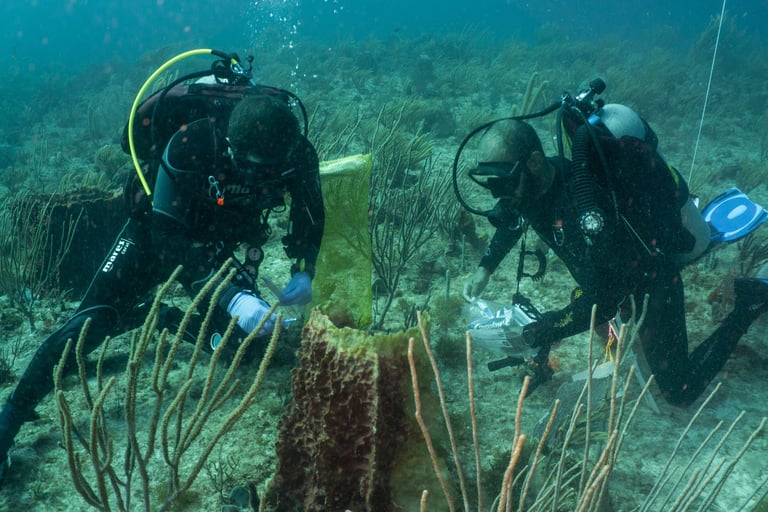
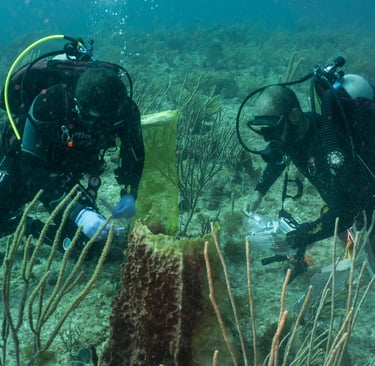
Our lab's work in coral reef conservation and restoration has been recently highlighted in an article. The feature showcases our dedication to understanding and protecting coral ecosystems, emphasizing the significance of our research in addressing the challenges faced by coral reefs. For more details on our efforts and the importance of coral conservation, visit Roger Williams University News.
Research Publication -
vAMPirus: A versatile amplicon processing and analysis program for studying viruses
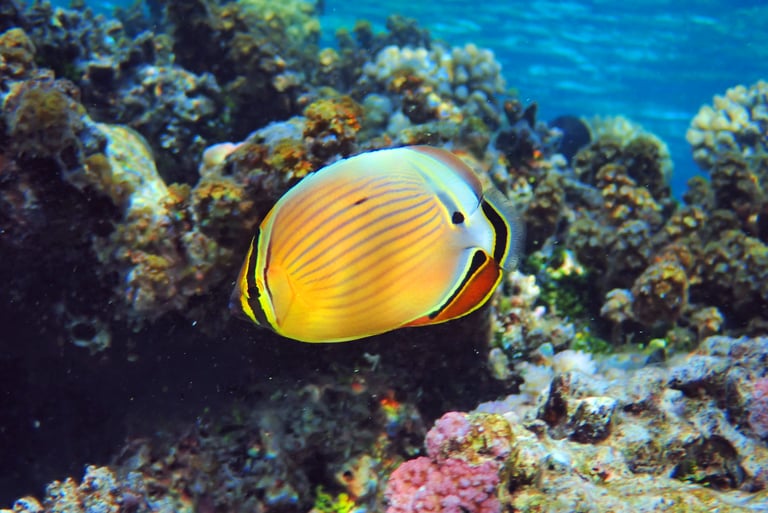
We're excited to announce the publication of our latest study in Molecular Ecology Resources, where we introduce a new bioinformatics tool designed to analyze viral sequencing data. The tool was applied to explore reservoirs of Symbiodiniaceae-infecting RNA viruses on coral reefs, providing new insights into virus-host dynamics and the potential impacts on coral health. This work also represents a significant advancement in methods accessibility, reproducibility, and standardizability in viral ecology research. For more details, read the full publication here.
Workshop -
Olas de Cambio Taller I: A free 6-day summer workshop for PR undergraduate students
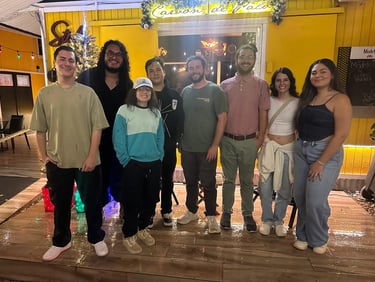
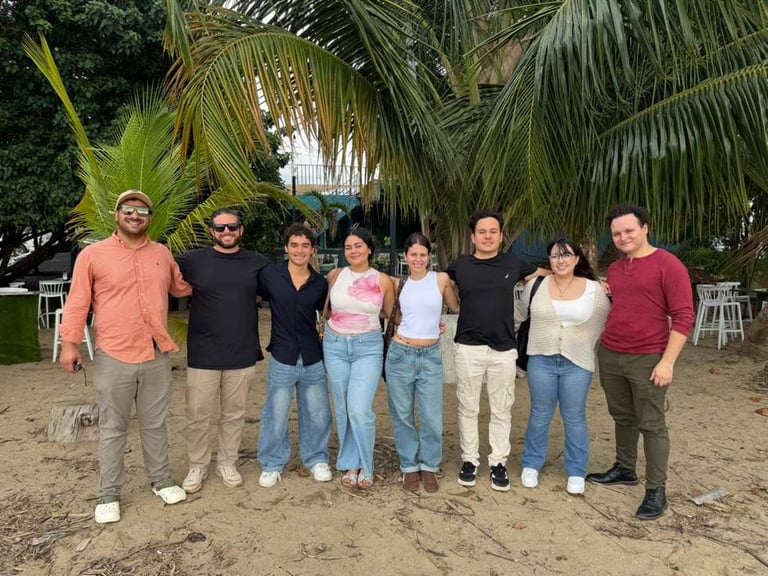
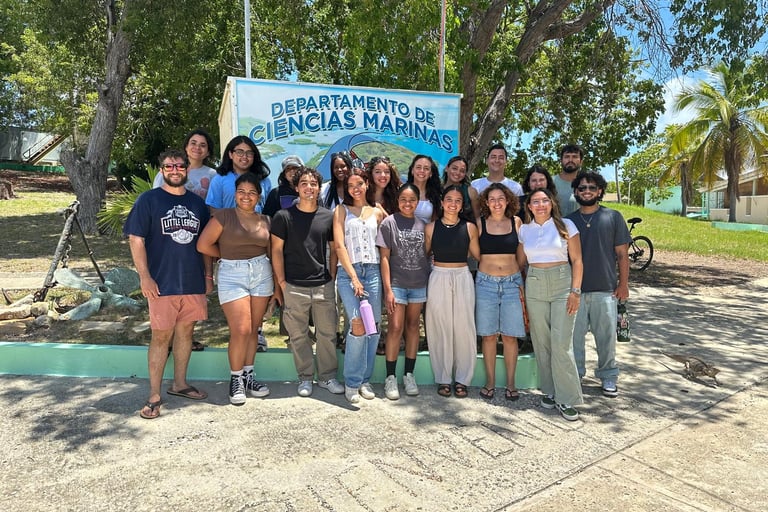
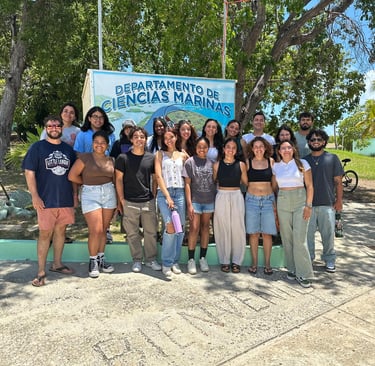
The "Olas de Cambio Taller I" was a 6-day immersive workshop for undergraduate students from Puerto Rican universities, organized in collaboration with the non-profits Head Above Water and EcoAzul. Participants received hands-on training in essential field skills, explored various disciplines within marine science, and benefited from professional and personal development sessions, including financial literacy. This comprehensive program aimed to equip students with the knowledge and skills needed for successful careers in marine science. Check out the highlights on Instagram here.
Research Publication -
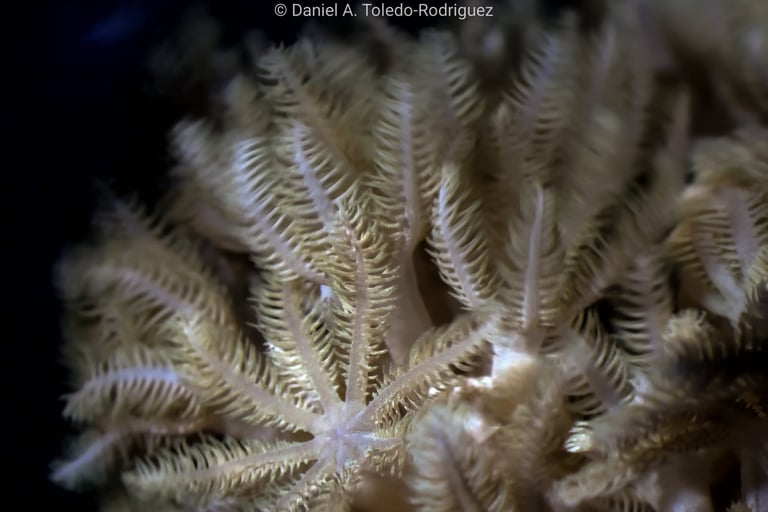
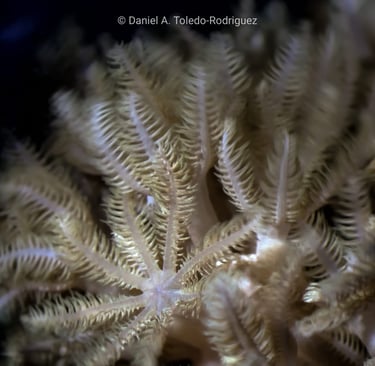
Identification of a new invasive soft coral species, Xenia umbellata, in southwest Puerto Rico
We've identified a new invasive pulse coral species in Puerto Rican reefs through reliable taxonomic methods. This discovery highlights the importance of continued monitoring and study of invasive species in local marine environments. For more information, please see the full publication here.
Research Publication -
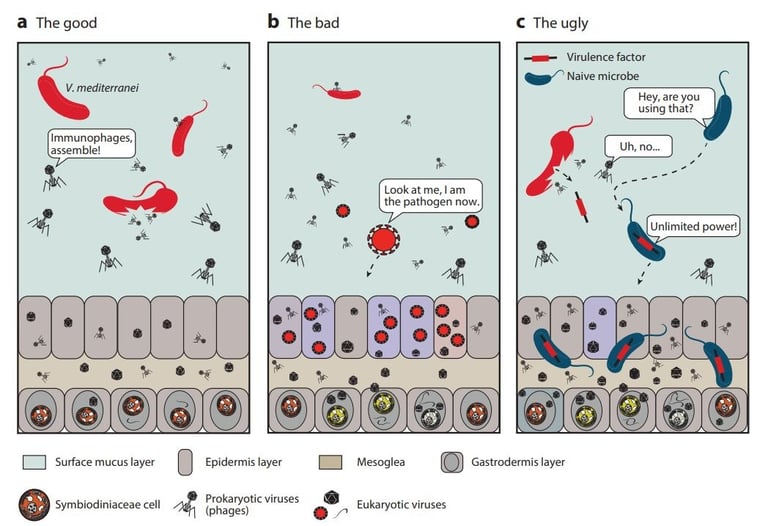
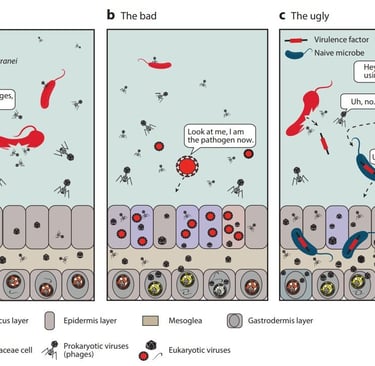
Coral Disease: Direct and Indirect Agents, Mechanisms of Disease, and Innovations for Increasing Resistance and Resilience
We are excited to announce the publication of "Coral disease: Direct and indirect agents, mechanisms of disease, and innovations for increasing resistance and resilience" in the Annual Review of Marine Science (2024). Developed in collaboration with leading experts, this review serves as a critical guide for future coral reef restoration efforts. It clarifies current knowledge on coral diseases, emphasizing their similarities, differences, and the role of probable and less likely pathogens. By uniting the latest research, this work presents strategies to enhance coral resilience, offering valuable insights for scientists and reef restoration practitioners.
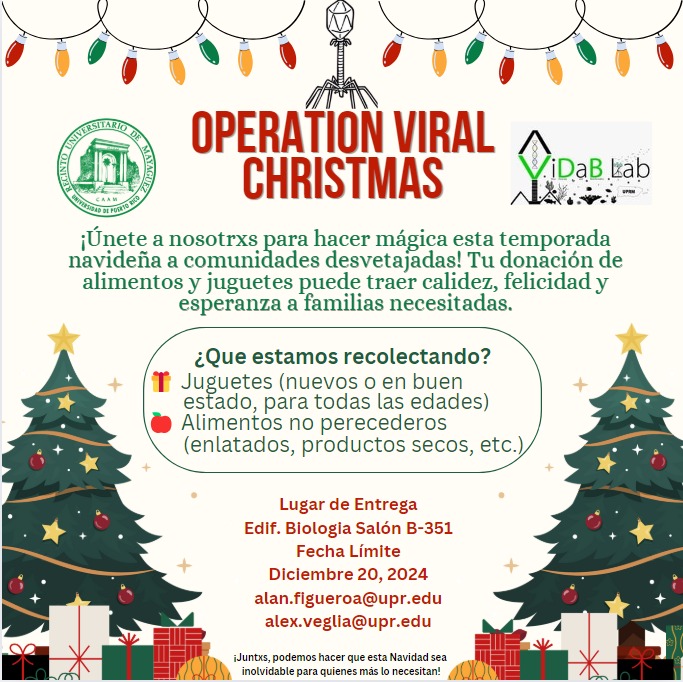
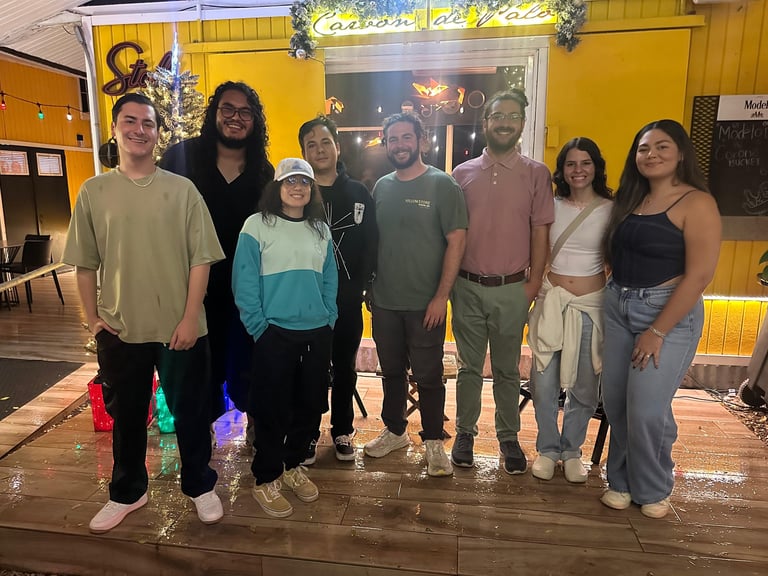
Operation Viral Christmas is an initiative concieved by our very own Alan Figueroa and then adopted as an annual tradition in the ViDaB Lab! During the 2024 holiday season, we conducted a donation drive to collect essential goods, including food, toys, and other gifts. These collected items are then distributed to families and children in under-resourced coastal communities in Mayaguez, Puerto Rico, during a special event during the holiday season. It was a great success, members of the lab handed out of 40 gifts!
Community Initative -
Operation Viral Christmas
Community Event -
Manatee Conservation Night in Bario El Seco, Mayaguez
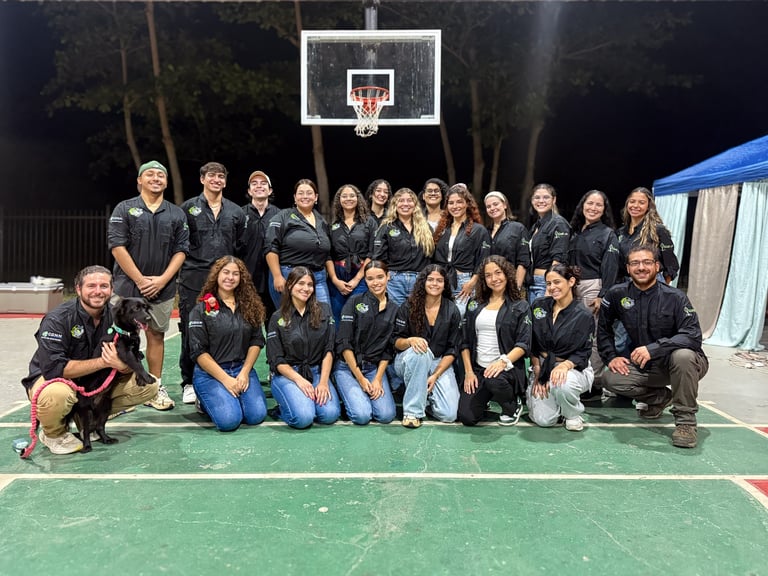
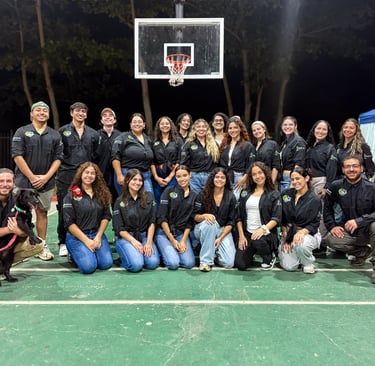
On March 27, ViDaB Lab master’s student Alan Figueroa Ruiz led an inspiring community event in Barrio El Seco, Mayagüez, dedicated to protecting Puerto Rico’s manatees—one of the island’s most beloved and endangered species.
The day featured a Film Forum screening of Manatí, el viajero sobreviviente and hands-on educational activities for children, designed to spark curiosity and appreciation for marine life. Alan also shared insights from his ongoing research on the parasite Toxoplasma gondii, which is transmitted by stray cats and may affect manatee health through runoff into coastal waters. The event brought together children, families, and community members to celebrate learning, conservation, and the power of connecting science with local action.